Packing works the same way for everyone: you recall everything you need on the night before, pack it, and discover a day later in another city that the charger is at home. Or that you brought three t-shirts and no long trousers, having gone to the mountains.
This is not forgetfulness. It is that the list gets written from scratch, from memory, at the worst hour of the day.
One list that never gets deleted
Keep a single note and do not throw it away after the trip. Do not delete the items either, just clear the ticks: the list is not a consumable, it is a tool that gets better every time you use it.
The point is accumulation. After the third trip it contains everything you personally tend to forget, and packing turns into moving down a list instead of interrogating your memory.
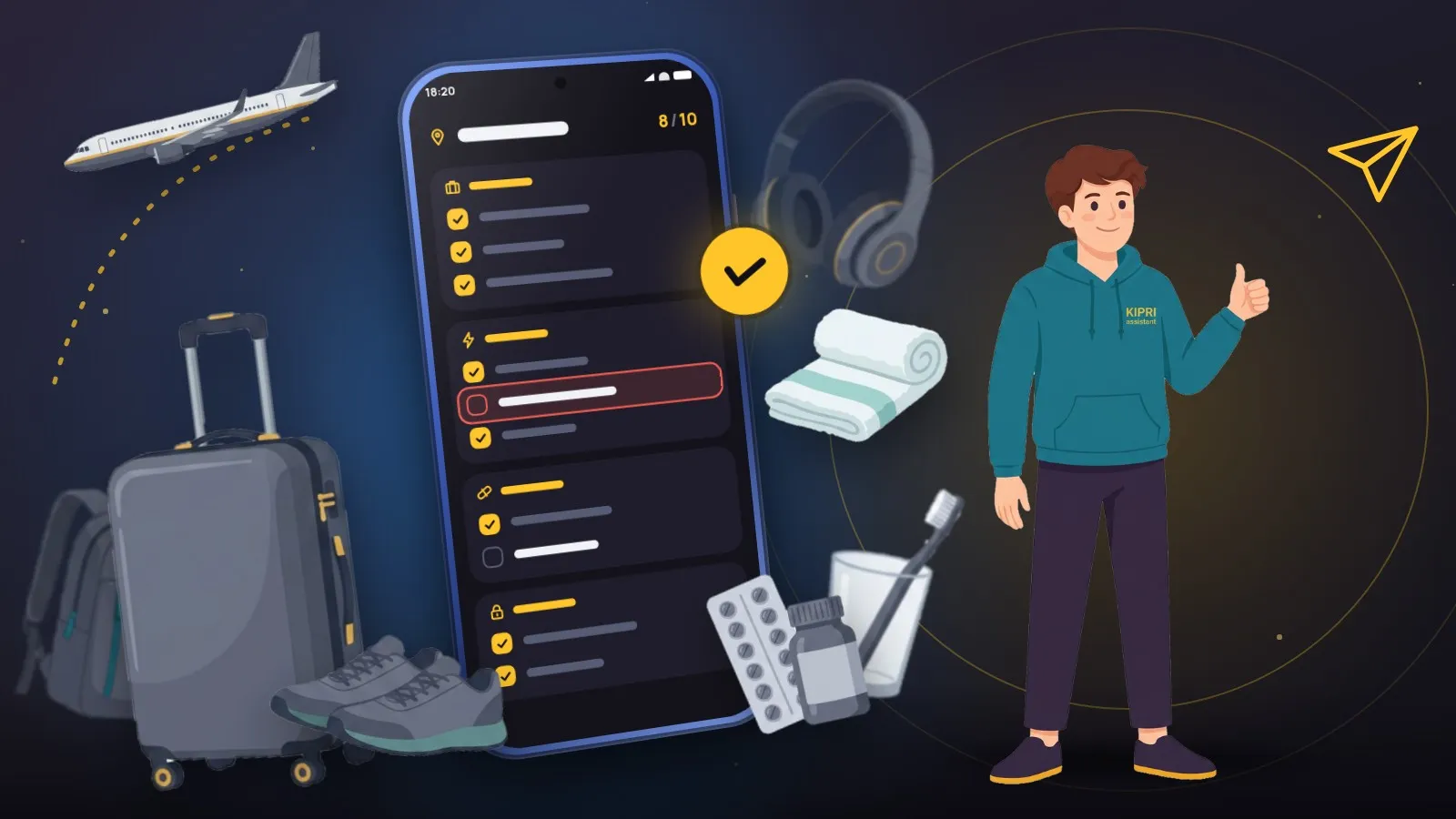
In KIPRI notes a list like that is worth pinning to the top of the board: it does not sink among the other cards and opens in one tap while the suitcase is already on the floor.
Sections matter more than completeness
A flat list of sixty items does not get read. The same list in five groups takes five minutes.
Documents and money. Passport, licence, insurance, bookings, a card from a second bank in case the first one blocks something, a little cash.
Electronics. This is where most of the forgetting happens. Chargers matched to the number of devices, cables, a plug adapter, a power bank, headphones. And a separate line for chargers belonging to things you do not think of as electronics: a watch, a shaver, an electric toothbrush.
Medicine. Your regular prescriptions with a couple of days’ more than the trip needs. The prescription itself or the original box if you are crossing a border. Then the ordinary kit: painkillers, something for your stomach, plasters.
Clothes, by weather and by occasion. Not “t-shirts” but “t-shirts for four days”. And check the forecast two days before you leave: half of packing mistakes are clothes for the wrong weather rather than clothes left behind.
Trip-specific. Laptop and adapter for work. Swimwear and flip-flops for the sea. Boots and a rain jacket for the mountains. This section changes every time; the others barely do.
The same list has a page of its own: it adds sets for the sea, the mountains and travelling with a child, and you can print it.
The rule that makes it work
Add to the list right after a trip, not before the next one.
The only moment when you know exactly what you were missing is the first days after you get back. Six months later it is gone completely. Five minutes on the day you unpack does more for the list than an hour of planning before the next departure.
Record the opposite too: what you carried and never once took out. After three trips there will be a dozen such lines, and the suitcase gets lighter.
On keeping duplicates
A duplicate wash bag beats any list. A second toothbrush, toothpaste, deodorant and razor that live in the travel bag permanently and never get unpacked at home. It costs one small purchase and removes an entire category of forgotten items forever.
The same trick with cables: a separate set that lives in the travel bag and never migrates to the desk. A cable pulled out of a suitcase “just for tonight” does not come back.
Pack two days out
Not a week - that is tedious and you will need the things anyway. But not the last evening either.
The point of two days is that there is still time to buy something. A dead power bank, a finished prescription, a split case are all discovered exactly while packing, and the difference between two days out and the night before is the difference between a trip to the pharmacy and a holiday without your medication.
Set a recurring reminder for two days before each trip at the moment you book the tickets. When you book, you know the date for certain. Two weeks before departure, you no longer do.
The checklist from the article
Packing list
Tick what is already in the suitcase. The list lives only in this browser: come back to it before your next trip.
Ticks are cleared, items stay, as the article suggests.
Did this help?
Thanks, that is the best answer. If it helped, it may help someone else too.
Thanks for saying so. Tell us what was missing and we will add it: [email protected]